













































Senate Banking Committee Holds Hearing on Artificial Intelligence and its Role in Financial Services
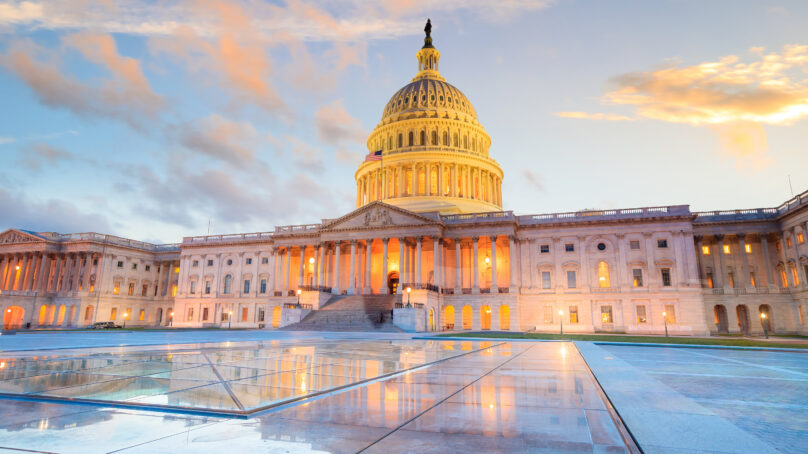
Last week, the United States Senate Committee on Banking, Housing, and Urban Affairs held a meeting to discuss the role of artificial intelligence in supporting and strengthening the financial services sector. The hearing, titled “AI and the American Dream: Promoting Innovation, Affordability, and American Dominance,” was meant to address both the extraordinary benefits AI may play in improving members’ lives, but also the inherent risks of a rapidly evolving technology, the focus being on responsible innovation.
In his opening remarks, Senate Banking Committee Chairman Tim Scott (R-S.C.) started by asking, “How do we get artificial intelligence right?” Addressing both the need to stay ahead of foreign nations, while also protecting consumers, he stressed the importance of Congress and its role in guiding without governing.
“AI solutions that help increase affordability for American families will not come from government bureaucracy,” said Scott. “They will come from entrepreneurs, innovators, workers, and small business owners willing to use these new tools to build, compete, and solve problems. . .And when we consider regulation, we must ask whether it will make it harder for a community bank to lend, a startup to grow, or a family to access credit. We need thoughtful and well-informed solutions that protect Americans and mitigate major risks without hampering innovation or pushing it overseas.”
Senator Elizabeth Warren (D-Mass.), in her opening comments, placed a heavy focus on that responsible innovation, expressing deep concern with the impact of aggressive development of data centers and its impact on American families; the extreme levels of debt companies are going into to finance their development; and the further risk of a concentration of wealth at the very top due to unregulated AI.
“AI holds tremendous promise,” Warren said. “But Americans are rightly concerned that it could further rig our economy. Congress can no longer be a bystander as the risks from AI grow nearer and millions more American chips are sent to China. It is time for Congress to stand up so that the American people can share in the success of this technology – and not just be left holding the bag for whatever goes wrong.”
In a letter submitted to the Senate Banking Committee in advance of the meeting, America’s Credit Unions emphasized the ways in which credit unions are already using AI to benefit their operations and members: “Credit unions are seeing firsthand how AI is increasing staff efficiency, automating previously laborious tasks, reducing paperwork, and expediting loan decision making processes.” They also lauded its uses in fraud prevention and identity verification.
Their recommendation to Congress? Don’t take a “stringent stance” on regulation, as it could disproportionately harm credit unions while benefiting the largest financial institutions. As credit unions are already highly regulated financial institutions, “an appropriate regulatory framework should recognize the need for less prescriptive intervention and greater accommodation of innovation through pilot programs, no-action letters, waivers, and
elimination of outdated rules. In an environment where non-bank fintech companies may enjoy a less rigorous supervisory oversight than traditional financial institutions, regulators should be exploring frameworks that make innovation accessible not just to the largest and most sophisticated entities, but also to smaller, community-based institutions.”
To watch the full hearing, visit the Senate Banking Committee website.