













































Photo credit: Corozo Credit Union
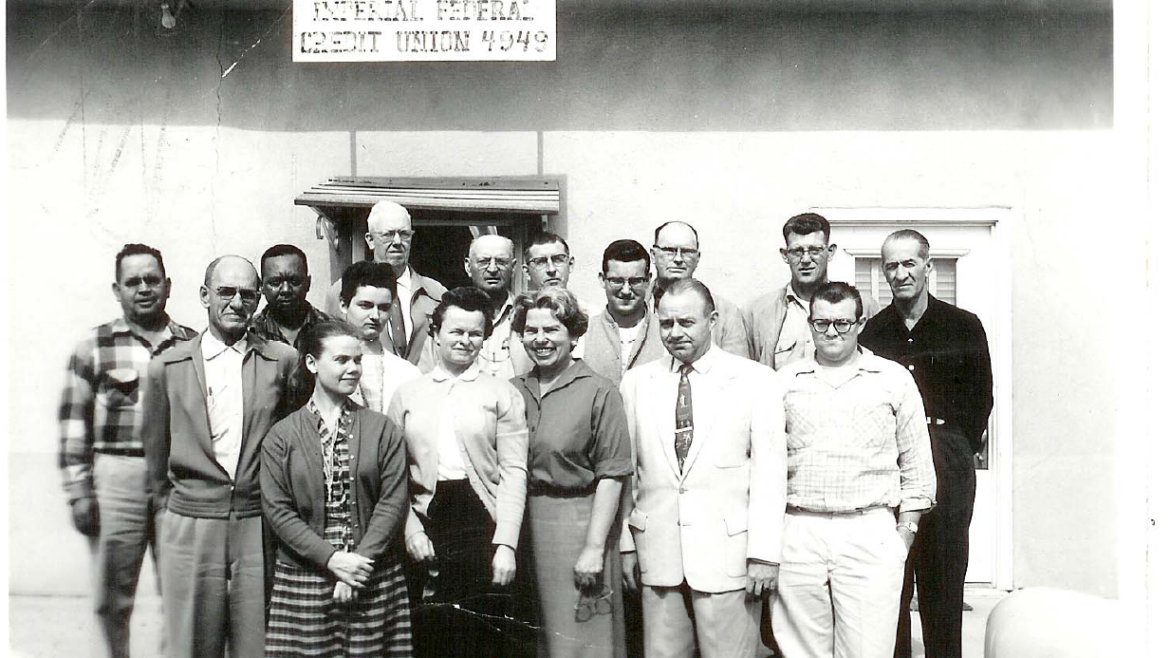
We all know the stories. The teachers who each put $1 into a cigar box. The farmers who pooled what little they had. The factory employees who banded together.
At the dawn of the credit union age, new cooperatives were formed by people of little to modest means with the few pennies they had in their pockets and a collective hope of being able to better their lives and communities. To form a credit union back in those days required but three things: a group of people with a need (the who), a few spare dollars (the how), and a desire to make a better and safer financial future for themselves and those around them (the why).
Nowadays, credit union foundings are a rare thing, and they move at a snail’s pace. Opening one new credit union typically takes several years, and becomes a full-time job for its founders. Since 2014, only 33 new credit unions have received charters. By comparison, in a mere eight-year period, Alphonse Desjardins assisted in founding 140 credit unions. Edward Filene and Ray Bergengren’s decade-long cross-country trek resulted in 1,100 new credit unions. Louise McCarren Herring helped start 500 credit unions herself.
So what changed over the years? What happened to those “with $20 and a dream” credit unions, and why have we lost them? And more importantly, does changing our how alter our purpose and mission—our who and why —or are we still today, at our core, the same as we were 100 years ago?
Then vs now: the how
In the 120 or so odd years since the first credit unions were founded, the process for creating a credit union is unrecognizable from what it once was. Thanks to modern-day requirements, new credit unions cannot be formed in the same way, with poorer community members pitching in to form a collective sum of money. For starters, the application alone reaches over 110 pages, and hopeful credit unions require serious financial backing, as the NCUA recommends a minimum of $500,000 in capital for new credit unions.
In 1909, when the first credit union in the US was founded, that $500,000 would equate to $13,500. By comparison, most credit unions at the time started with tens of dollars. Not hundreds or thousands, tens. Ford Engineering Employees Federal Credit Union (now DFCU) started in 1950 with only $35.
Imagine asking those teachers, farmers, or factory workers with a combined total of $30 to raise $13,500 before even applying for their charter. Not many, if any, credit unions would have made it to the finish line.
But while we love to look back at these origin stories through a nostalgic lens and marvel at the sheer simplicity of it all—people helping people with a mere $10 dollars in their pocket—there’s a reason that when you hear these older credit union stories, they often mention one employee (a volunteer, of course) running the entire operation out of the back of a church, a closet, a classroom, etc., with deposits kept in the cigar box.
Those early credit unions weren’t being intentionally quaint; they simply lacked the funds needed to have a designated building or employees of their own. We may long for the simpler times of yesteryear, but just try getting new members today by telling them that “Bob” will keep their money in a cigar box in his desk, which just so happens to be in the closet of a nearby school. (“No, it’s not weird, we promise he’s trustworthy!“)
That $500,000 funding requirement by the NCUA may seem appalling when looking back at our origins, but much of that cost goes into paying employees and operating a brick-and-mortar location, which is still a necessity for many. And none of that even touches on modern technology, services, and cybersecurity requirements.
In fact, according to a 2018 report from the Financial Brand, “a branch typically costs between $600,000 and $800,000 a year to run, including overhead and back office support costs.” Considering that statistic is eight years old, that figure has most likely grown significantly, and the $500,000 sum doesn’t seem quite as outlandish anymore.
While it’s okay to look back at our movement’s origins and the wholesome simplicity of those original credit unions, I’d argue our more complex and stringent chartering and financial requirements are a necessary evil. However, that doesn’t mean the system cannot be improved, and the NCUA is currently working on doing just that.
But overall, the how should not be our biggest concern. Times, technology, the value of the dollar, member expectations…those all change over time, and our systems must change with them. But the thing that should never change should be our why. We should always remain tied to the cooperative, people-first values that built the industry.
Then vs now: who and why
So yes, the process of how credit unions are born may have drastically (and justifiably) changed, but what about our who and why?
Credit unions were always made for the underserved communities. The groups that traditional banks wouldn’t or couldn’t serve due to their lack of means, who were often targets of predatory lending practices. Back in the early years of credit unions, that often meant those of lesser means—teachers, city workers, first responders, farmers, blue-collar workers, etc.
And while yes, many of those groups would still qualify as underserved today, time and change have resulted in new groups entering that demographic who need credit unions of their own. However, unlike the past, many of those groups are not defined by their employment, religion, or ZIP code, but by their identities, ethnicities, or circumstances.
Some of the most financially vulnerable and underbanked demographics nowadays include ethnic minorities, immigrants, disabled individuals, uneducated individuals, single parents, and members of the LGBTQ community. Due to circumstances—lack of funds, no credit score, systemic hurdles, wage gaps, discriminatory lending practices, etc.—they are often turned away from big banks.
But new credit unions are rising up to meet these communities. Instead of location-based credit unions as in the past, many new identity-based de novos are forming. Superbia Credit Union, an online-only credit union made for the LGBTQ community, received its charter in 2019 with a mission to “discrimination-free banking, life and health insurance, and money management services that fully consider the needs of our LGBTQ community.”
African Diaspora Federal Credit Union received its charter just last year and aims to provide financial services “to people of African origin—whether recent immigrants or descendants of earlier generations—who live outside the African continent but maintain cultural, historical, or emotional connections to Africa,” regardless of location. The institution also has a focus on non-English speaking community members, and employees collectively speak “more than 20 languages.”
Additionally, Carolina Credit Union Initiative is a student-led movement working to get a student credit union up and running with the mission “to build a sustainable, student-operated credit union that supports the Carolina community through inclusive, ethical, and educational financial services.”
The endeavor was started by a group of students who realized that thanks to the monopoly big bank Wells Fargo had on campus, many international and first-generation students were unable to open accounts or get debit and credit cards. Furthermore, the students sought an alternative to Wells Fargo as they disagreed with its ethics and mission.
These credit unions are fantastic examples that prove while the groups starting credit unions may have changed a little over the decades, as the demographics of the underserved change, their purpose, mission, and heart remain the same: to provide underserved communities an alternative to traditional financial institutions and meet the needs of those who are so often overlooked or rejected by those institutions.
Even in our newest credit unions, the needs, hope, and desire that built our movement over a hundred years ago can still be found.
Our one constant: people helping people
The times change, and we as a movement change with them. Often, that change can feel frightening, or give the impression that something is being lost. We may feel disconnected from our founding. But while our origin stories are certainly histories to be proud of, the heart of credit unions was never about the process but the people.
We may not horde money in the cigar boxes anymore. It may take more than a few days, $30, and a dream to start a credit union. But our work goes on, and the credit union leaders of today are rising up to meet that challenge. From the students in Carolina hoping to create a financial institution they can believe in to Superbia and African Diaspora leading the effort to serve their marginalized communities, the credit union mission lives on.
To stay alive, we must evolve. Our how will change, our why and who may look a little different. But as long as our mission to put people over profit through cooperative values and serve the underserve carry on, we stay the same at our core, and that’s what counts.
Author


Comments
Chip Filson#1
good article with important historical examples and several current new charters.
Would suggest a slightly different view of why charters are so few. Yes the application process is cumbersome, bureaucratic, and based on assumptions and requirements that have little to no applications for new charters. there is not statuatory or regulatory basis for a $500K minimum capital. Much of the details are because the process is centralized in DC overseen by people who have often enver run a credit union. NCUA could simplify the process overnight if they wanted-it is not even a priority in the deregulation initiatves because the issue has no constituency asking for it.
Which leads to the second difference between then and now. There is no regulatory support, system backing or even individual credit uniion efforts to help found new credit unions. What is notable about Herring’s efforts was that she also ran her own credit union while helping start others, the leage, and mutiple other system support organiztions such as today’s ASI.
If those of us who inherited the legacy that brought us to today’s success, do not reinvest new institutions, then through consolidation, neglect and just loss of interest, credit unions will become a very mature industry without much appeal to those seeking financial solutions or entrepeneurs wanting to help promot the ommon good.
New coop charters matter. When there is no efforts to found startups, the energy and relevance for the future is lost by both the movement and the public.