












































Photo Credit: The Ohio Credit Union League
Certainly you’ve seen the classic movie, It’s a Wonderful Life, starring Jimmy Stewart and Donna Reed. If you haven’t, you should. The reason it’s just as relevant in July as when the film usually airs (during the holidays) is that it’s a credit union story (of sorts).
There’s a lot going on in the movie, but at the heart of it is George Bailey, a dreamer who is forced to take over his father’s struggling Building and Loan in the town of Bedford Falls. The Building and Loan operates as a member-owned cooperative focused on community over profit. For the working-class people in town, it’s a chance to own a home instead of renting from the town’s robber baron and banker, “Old Man Potter.”
When a financial crisis hits, George wonders if his life and the Building and Loan matter and, in despair, jumps off a bridge into the icy cold water. I’ll stop here in case you haven’t seen the movie, but I will say, in a twist of fate, George gets a chance to see what life would be like in Bedford Falls if he and the Building and Loan never existed.
In towns all across this country, the credit unions of America fill an important role. Just like in the movie, if credit unions didn’t exist, this would be a far different world, and not in a good way. People and communities thrive with the help of their local credit unions. Disasters happen, but it’s the credit unions that come to the rescue. When members face tough times, their credit union sticks by them and gets them through it.
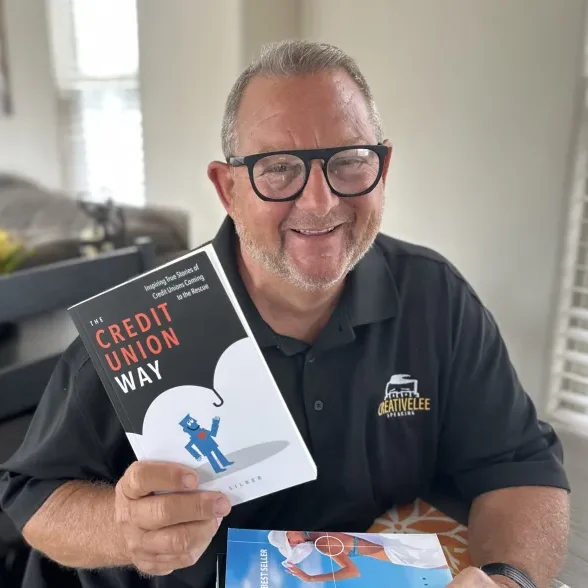
I was so inspired by how credit unions put people over profits, finance people’s dreams, and leap into action when tragedy strikes that I began collecting stories and compiled a book called The Credit Union Way. It celebrates credit unions all year long, but for Credit Union History Month, I want to share perhaps my favorite story that (almost) goes back as far as It’s a Wonderful Life does.
The “Mother of Credit Unions”
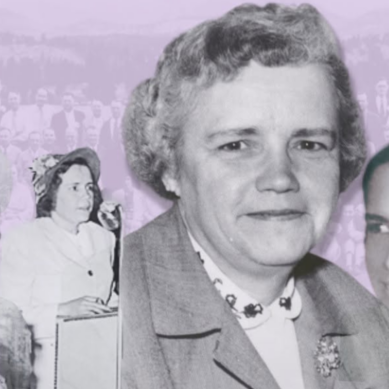
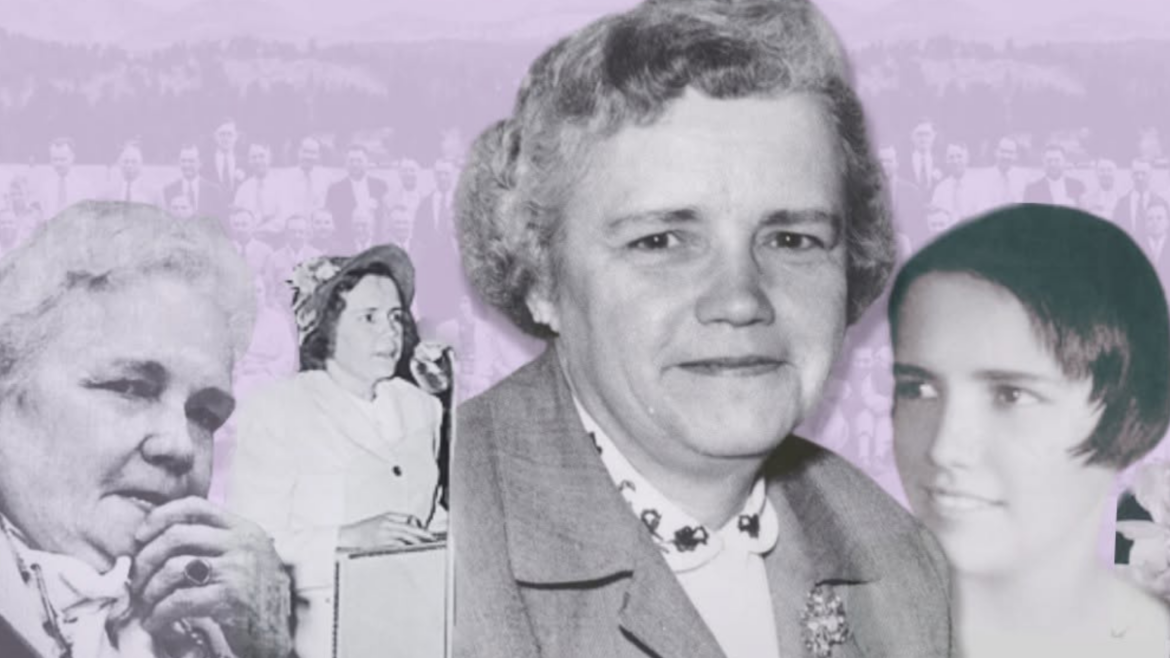
What were you doing at the age of 23? Probably not helping to create the credit union movement during the Great Depression, as a woman in a field dominated by stodgy old men, all while holding down a full-time job. You know who does that? Louise McCarren Herring, that’s who.
Let’s start at the beginning. After graduating with a Business degree from the University of Cincinnati in 1932, Louise McCarren was hired by the Kroger Company (the giant grocery store chain) to work in the personnel department at their corporate offices in Ohio.
It was there she discovered the employees of the company couldn’t afford the same groceries they were selling—and she wanted to do something about it. To make matters worse, during those desperate times (The Great Depression), employees often turned to unscrupulous lenders when banks wouldn’t loan them money. These “Bucket Shop” loans came with ridiculously high interest rates, which meant the balance would rarely (if ever) get fully paid off, pushing Kroger employees deeper into debt.
Louise heard there was a new and better way to offer financial assistance to those who needed it. A man based out of Boston (Edward Filene) was pushing a concept called a credit union. Just as you’d expect, it was similar to what we see today—a cooperative owned by people who pooled their resources and then loaned them to each other at reasonable rates.
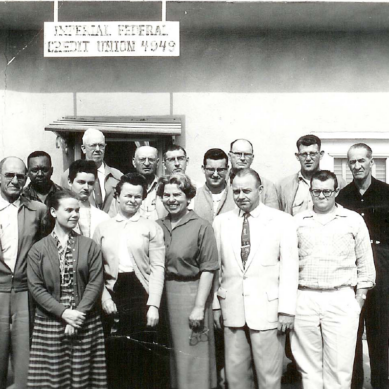
This was just what Kroger needed, so Herring set up not one, not two, but 13 credit unions to service the employees. The reason she set up so many smaller, member-based operations was so they could more easily be run by volunteers. It was an immediate success that quickly spread nationwide, which meant Louise went on the road to help grow the movement.
While traveling from town to town to pitch the credit union concept, Louise was stopped after dark in Columbus, Ohio, on her way to her next appointment—in the middle of a snowstorm. Due to the weather, she didn’t see the streetcar ahead unloading passengers and didn’t stop and wait—a crime at the time. At the police station, she was told she could pay the fine, post bail, or spend the night in jail. She told the officers she couldn’t stay or pay—she was on her way to Dayton (70 miles away) to set up a credit union for the police officers there the next morning. Upon hearing this the officers in the station started pitching in to pay her fine so she could make it to Dayton the next day.
Of course, Louise insisted on getting the address of every officer who loaned her money so she could pay them back. Enough was raised to pay the fine, but it came with a catch. Herring would have to come back at a later date and set up a credit union for them. She did a lot more than that.
Herring was instrumental in the creation of CUNA (Credit Union National Association, now America’s Credit Unions), the trade association for all U.S. credit unions. She also helped create (and run) the Ohio Credit Union League.
A legacy to be proud of and a history to remember
You’re probably thinking we’ve reached the end of the story. This extraordinary woman has already done enough to solidify her legacy as a credit union pioneer—all before her 30th birthday. However, she spent her entire life committed to the credit union movement, helping to establish 500 credit unions—while also working, raising five children, and volunteering her time for important causes.
To say Herring made an impact in the lives of others would be stating the obvious. To show what a ripple effect she (and those of us who are involved with credit unions) can have, she recounted an incident that happened in a hospital in her hometown. Facing serious surgery, she was greeted by the surgeon, someone she didn’t recognize—but he recognized her. It turned out she was the person who approved his loan to finish medical school.
Unlike traditional banking back then, credit unions offered opportunities for young women—and Louise McCarren Herring was the perfect example of that. After she founded the Kroger Employees Mutual Benefit Association (KEMBA), Louise was sent to represent Kroger as a delegate for a meeting in Colorado to establish a nationwide umbrella organization for the movement—she was 25 years old. On the train ride there, the organizers took a head count of all the delegates on board but kept coming up one short. The person doing the counting said she’d talked to everyone on board except “that college kid sitting over there.” They discounted her because she was a woman and seemingly too young to be that important. They were wrong.
Fittingly, Louise McCarren Herring died at the age of 87 at Good Samaritan Hospital (not from the above surgery) and was buried at the Gate of Heaven Cemetery in 1987.