




































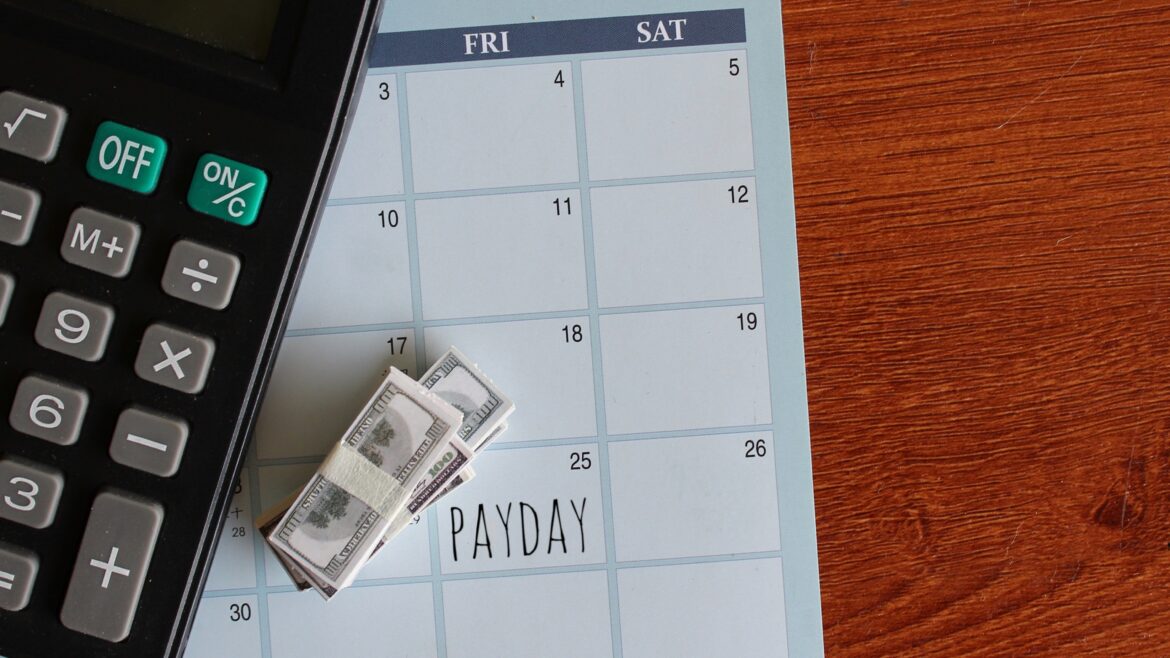
Financial Literacy Month continues, but not just for members. Here at CUSO Magazine, we seek to educate ourselves and our readers on the industry we love and its many intricacies. This year I have already covered stablecoins and interchange income. Today we look at an area of credit union operations that seeks to provide relief to members when they are at their most vulnerable: payday alternative loans.
What are payday loans and why are they so bad?
Before we can get into what payday alternative loans are, we first need to understand what they are an alternative to.
Payday loans have existed in some form or another for many years. In essence, they are a form of short-term loan borrowed against future earnings (i.e. an upcoming payday). They exist to provide desperate people with money in advance of a future paycheck.
In the early 1990s, payday loans emerged as an appealing form of small loans due to a lack of other available options. Lenders would provide a small loan against a check postdated to the borrower’s next payday, often with an APR in excess of 300%. According to Pew, over 30 states made these types of loans legal via statutory exemptions from state usury rate caps (the maximum rate a lender can charge). Since no credit or financial check is required, they became an easy and appealing way of getting funds in advance of a paycheck.
Despite state-guided limitations on how much can be borrowed, with a ceiling often set between $300 to $1,000, even these small amounts can create a cycle of debt that consumers find extremely difficult to escape. Single-payment payday loans are the most common, with only a handful of states having adopted reforms to break up repayment into installments.
“The large, unaffordable lump- sum payments required for these loans take up about a third of the typical borrower’s paycheck, which leads to repeated borrowing and, in turn, to consumers carrying debt for much longer than the advertised two-week loan term. In previous research, The Pew Charitable Trusts has found that single-payment loan borrowers re-borrow their original principal, paying multiple fees, for five months of the year on average.”
According to research from the Center for Responsible Lending, in 2022, borrowers took out over 20 million payday loans, for nearly $8.6 billion. How much did the lenders get from that? More than $2.4 billion in fees, all from low-income and cash-strapped borrowers.
Though many states have made efforts to reform payday lending and improve consumer protections, they continue to be extremely profitable for payday lenders at the borrower’s expense, who have had few other good options.
What alternatives have members traditionally had?
One of the main reasons for payday loans’ success is that there were not many good options for consumers. Many have viewed overdraft protection as a form of short-term, small-dollar “loan” to cover expenses, but when considering the typical fee of $35 (before the “junk fee” movement), using overdraft in this way could result in what was essentially a loan with an APR in the thousands.
Credit cards might have an APR ranging from 12 to 30 percent, making them a far less costly option. Compared with the payday loan’s APR in the hundreds, credit cards offer flexibility and quick access to funds. But those in need of that credit are also less likely to have access to it, with households earning less than $25,000 half as likely to own a credit card than those earning over $100,000.
MyCreditUnion.gov lists “Borrowing from family and friends” as a better alternative to payday loans. While true, it also highlights the reality of the situation: payday loan borrowers aren’t using payday loans because they want to, but because they do not have many good commercially available options (or they just don’t know about them).
Enter Payday Alternative Loans
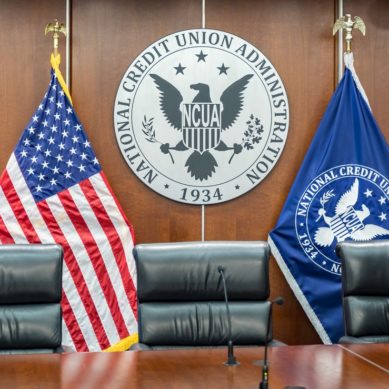
There is hope, though! In 2010, the National Credit Union Administration created options for payday loan alternatives for federally chartered credit unions. The program has undergone a few changes over the years, but through it, the NCUA allows FCUs to offer Payday Alternative Loans (PALs).
In essence, PALs provide short-term, small-dollar loans with limited fees and minimal requirements. One of the key requirements is that the individual borrowing must have been a member of the credit union for one month. The program stipulates that the credit union can charge an application fee, but only enough to recoup the cost of processing, and not in excess of $20, with the amount of the loan limited from $200 to $1,000, and for a term of no more than 6 months. The member can receive up to three PALs during a 6-month period, provided they do not overlap and do not roll over.
Introduced in 2018 and approved in 2019, a second option was created (PALs II) to address some of the limitations of the original PAL I. Per the legislation, “these different features will help FCUs meet the specific demands of certain payday loan borrowers that may not be met by PALs I and provide borrowers with a safer, less expensive alternative to traditional payday loans.”
Those features unique to PALs II include a higher loan amount ($2,000), longer maximum loan term (12 months), no minimum membership length, and no rolling limitation on the number of PALs the borrower could have, but still with no more than one active at a time.
The longer repayment structure (months as opposed to weeks) and lower APR (28% vs. as high as 400%) makes PALs a far more sensible and helpful option for consumers in need of access to funds in a pinch.
Given all the positives of PALs and credit unions’ mission of helping their communities, we’d expect these to be pervasive. But they aren’t.
Growing, but still far behind
The number of federal credit unions that offer PALs is growing, but as recently as 2024, these counted just 467 FCUs. As of year-end 2025, federal credit unions reported $328 million in payday alternative loans, from over 300,000 loans. A far cry from the millions of payday loans made worth billions of dollars in fees.
Granted, many federal credit unions may already offer PALs-adjacent personal loans, that fail to meet all the PALs requirements. The APR on these loans will be capped at a lower rate, but may also come with stricter eligibility requirements. Regardless, the numbers show that there is a massive opportunity for credit unions to offer these kinds of products, and dare I say a massive responsibility to.
If you are from a state-chartered credit union and thinking, “Well, where does this leave us?”, fret not. Many states have similar programs or are actively working towards implementing them. And as mentioned above, although not official PALs, state-chartered credit unions can and often do offer emergency-type loans. And with lending technology constantly improving, application to fulfillment is getting faster and more convenient than ever.
Credit unions have more competition
That rapidly evolving technology isn’t just a boon to credit unions, though. Cash advance apps (like Dave, EarnIn, or Brigit) are popping up that let you borrow from your next paycheck. And while an app like Dave does not charge late fees or interest, it may draw members negative resulting in fees. They’re also limited by their underwriting, which may put the most in-need members out of reach.
Alternatively, Buy Now Pay Later options are becoming more readily available, but they come with their own risks for consumers, including the potential for overspending, leading to a cycle of debt down the road.
And then there are a slew of online lenders offering small loans to individuals with bad credit.
While all these options are arguably better than payday lenders, they all come with caveats. Credit unions have options available to them to fill the needs of their cash-strapped community, the hard part is getting the word out.


