

















































While our excitement and anticipation for the event are as high as ever, it’s important to note that things look a tad different heading into GAC this year. For starters, America’s Credit Unions is operating under new leadership since Jim Nussle stepped down as President and CEO of the organization last year. His successor, Scott Simpson, took over the role last fall, and this week will mark his first GAC as captain of the ship.
Additionally, things in the nation’s capital have seemingly been constantly changing since last year’s conference. The NCUA board is in a unique position, as former board members Otsuka and Harper’s lawsuit is still ongoing, their spots on the board are still vacant, and Board Chairman Kyle Hauptman is still running a one-man operation.
Furthermore, with threats to interchange still on the table, the administration pushing for a credit card interest rate cap, and the ever-present threat of taxation looming in the background, credit union advocacy is desperately needed on Capitol Hill. Thankfully, the cavalry has arrived just in time.
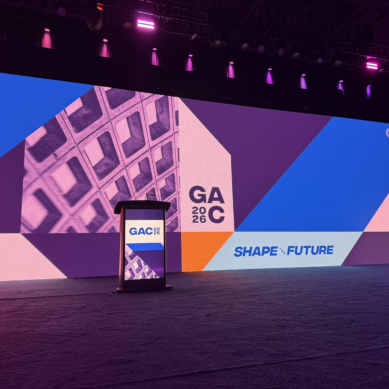
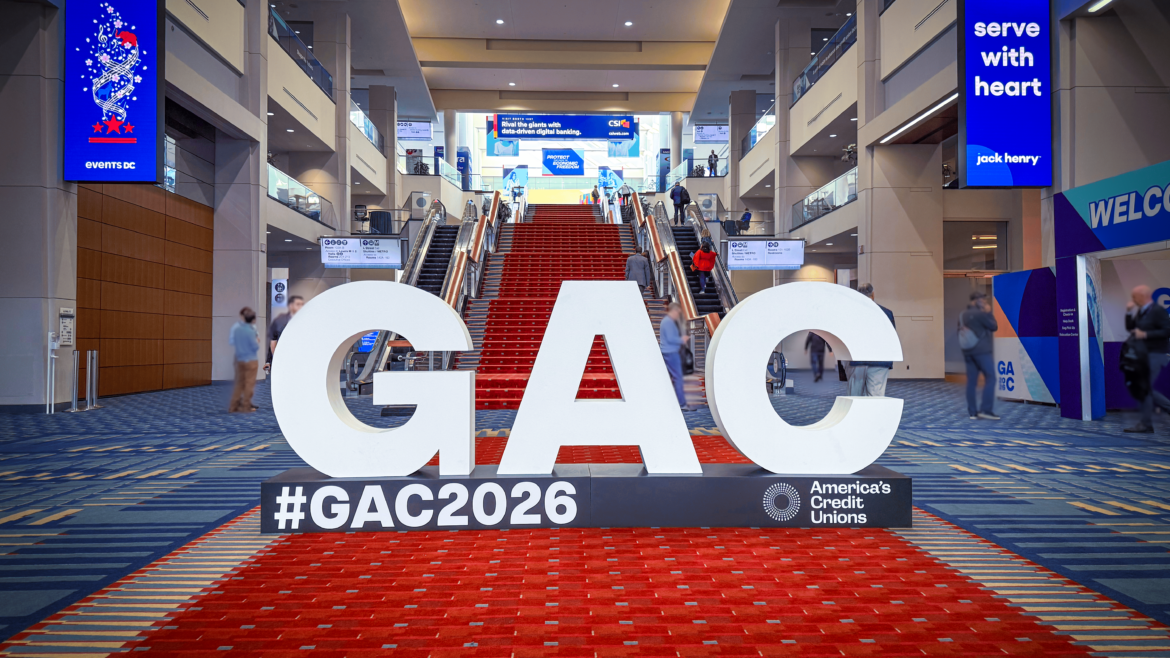
With all that in mind, the week ahead promises to be one for the history books. So, without further ado, let’s jump into all that day one of the 2026 Governmental Affairs Conference had to offer!
The Underground 2026: Breakthrough CULTure
While Sunday may be the day of rest, for those 6,000 credit union professionals in D.C. this week, it was anything but, with the work starting bright and early yesterday morning.
Before the official start of the Governmental Affairs Conference later in the day, many credit union leaders and champions would first spend the morning learning from and challenging one another at The Underground, a much-loved annual event hosted by Mitchell Stankovic & Associates.
Each year of the Underground sports a different theme meant to encourage attendees to truly reflect on the industry through a new lens and perspective. As host Dr. Brandi Stankovic puts it, “[The Underground] is not about content, it’s about confrontation.” The theme for the Underground 2026 was Breakthrough CULTure, aimed at discovering how credit unions can build cult-like support and a sense of belonging while also being cognizant of the blind spots and echo chambers these groups can create.
“A movement without self-awareness becomes a really big cult,” said Vince Passione, President and CEO of Lendkey.
By collaborating together and confronting our norms, the Underground hopes to help credit unions break out of old-fashioned molds and statements such as “We’ve always done it this way.”
“We need to look beyond and not be blinded, and be able to evolve,” said Stankovic.
In that vein, many of the panels broached some of the more controversial topics in our industry, such as mergers, executive compensation packages, cryptocurrencies, and more, to examine just how we are approaching these topics and where we might re-examine our thought process.
One continually discussed topic throughout the morning was the need for credit unions to keep up with modern technology and payment methods. Lagging behind or masquerading as modern while still requiring things like in-person signatures for account openings won’t help credit unions gain a fanbase, panelists agreed.
Speaking on the topic of “Digital Tsunamis” was Louis Hernandez Jr., Founder and CEO of Black Dragon Capital. “Agility and urgency are not descriptions of most cultures in credit unions, and it really needs to be. We cannot rely on our institutions of government for regulatory frameworks because they are never going to catch up. It’s up to us as leaders to find a way to navigate through those limitations to serve the soul of who we are, which is the member.”
Speaking of new technologies and regulatory frameworks, the GENIUS Act, the first regulatory framework for payment stablecoins, received a good amount of attention during the morning’s panels. With credit unions now legally permitted to accept Stablecoins, many credit unions are looking at paths forward. In fact, TruStage announced just that morning that it would begin issuing Stablecoins to credit unions.
But is the juice worth the squeeze? Stephen Bohanon, Founder and Chief Strategy Officer of Alkami, asked this exact question to his panelists, who all said yes, but for various reasons.
For some, such as Amber Harsin, CUDE, VP of Credit Unions at Mambu, Stablecoins have gone beyond mere fad or trend and are “The next structural shift of money.” With members demanding their money movement be faster than ever, Stablecoin is the next step. Others, such as Kevin Brauer, President and CEO of Affinity FCU, are more hesitant. Braurer noted that while members certainly don’t seem to be asking for it, merchants will most likely demand it at some such point. And with interchange at risk, Stablecoin fees could step up in its place.
Despite the disagreements in how or why Stablecoin might become commonplace, all were agreed that crypto is here for good, so it’s time for credit unions to start examining possibilities.
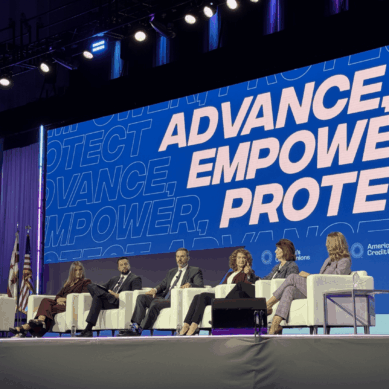
Kyle Hauptman addresses the status of the NCUA at Underground
Also making an appearance at the Underground on Sunday morning was NCUA Chairman Kyle Hauptman. Since the firings of former NCUA board members Todd Harper and Tanya Otsuka last April—whose lawsuit challenging the firings is still waiting for a verdict—Chairman Hauptman has been serving as the organization’s only board member, despite his term expiring in August of 2025.
While there is no limit to how long an NCUA board member can remain on the board past their term limit, Hauptman, who accepted a new role on the Public Company Accounting Oversight Board for the Securities and Exchange Commission last month, admitted the lack of a successor and that no other board members have left him in a sort of limbo.
At the same time, the NCUA was part of the administration-wide government downsizing that occurred last year, losing 20% of its staff. Later that year, it also began a consistent deregulation effort, in part due to necessity (a smaller workforce means fewer examiners available), and in part to ease unnecessary and burdensome regulatory requirements on credit unions.
These rapid changes, whether believed to be positive or negative, have left the industry wondering what the future looks like for the regulator and the credit union regulatory environment.
Samantha Paxson, Principal/Chief Growth Officer of Acumen Financial, while speaking with Hauptman about what lies ahead for NCUA in the next year, called this time a “rollercoaster stage” for the NCUA, noting that many credit union leaders have found it to be both scary and different from any regulatory environment before.
Hauptman was quick to reassure the audience that while this time may feel frightening due to all the things going on in D.C., 2025 and 2026 (so far) have not been as dramatic as other years in terms of operating a credit union. There might be noise coming out of D.C., Hauptman noted, but there always had and always would be.
Not one to beat around the bush, Hauptman then got straight to the point, addressing the questions and concerns on many of our minds over the last year. Regarding the NCUA Board, Hauptman revealed that his successor will be named soon, stating the individual—while not named—had already been chosen and that he has already been in talks with them about the role.
However, from the vague timeline given, it seems this person will take on the position before the Harper/Otsuka lawsuit is settled. Meaning they will be running the board solo for a period of time. As far as the aforementioned lawsuit goes, Hauptman believes a verdict will be reached sometime this year, but with Harper’s term set to expire in 2027 regardless, he’s unsure what the outcome would be should the two win their case.
Finally, Hauptman stressed the regulator’s commitment to the deregulation efforts, praising his Chief of Staff, Sarah Bang, for her work in removing needless paperwork and excessive examination requirements, and reasserted his belief that the NCUA should not be what credit unions look to for leadership or growth advice. “The more people are looking to Washington and to the NCUA, the more we’ve failed,” said Hauptman. “D.C. is not supposed to matter that much.”
Hauptman is set to speak on the main stage at GAC on Monday as well.
Opening remarks from host Mia Perez
At long last, readers, we’ve reached the first general session of the 2026 Governmental Affairs Conference! As tradition, the event kicked off with a few words from none other than Mia Vista Perez, Chief Administrative Officer of Coastal Credit Union in North Carolina and longtime host of GAC.
Welcoming the over 6,000 credit union attendees to the conference, Perez shared her excitement for the week to come and the amazing advocacy work that would take place. With over 600 meetings on Capitol Hill over the next few days, as Perez shared, the focus for the general session and Sunday’s keynote speaker would be on helping attendees perfect their credit union stories to share during their hill hikes.
“Our efforts here are crucial,” said Perez. “We are 6,000 strong, but one unified voice. One voice with which we set the tone and future of credit union policy.”‘
While Perez encouraged leaders to meet with America’s Credit Union’s advocacy team for support in crafting their stories, she shared eight key words she believes all advocates should carry in their back pocket: “We protect our members’ path to economic freedom.”
Mastering the art of strategic storytelling
Following Perez’s introductory words, Brad Barnes, Chair of America’s Credit Unions Councils, took to the stage to briefly share the impact of the councils before welcoming the keynote speaker of the day, Kindra Hall. Hall would be delivering the first of what ACU has now dubbed an “Ed Talk,” inspired by industry pioneer Edward Filene.
“Ed Filene is known in our movement as a visionary and a thought leader. So it’s only fitting that today’s Ed Talk centers on strategic storytelling. Because stories are how we inspire, how we connect, and how we lead,” said Barnes.
As promised, Hall’s Ed Talk focused on how impactful and significant good storytelling can be. As a “Professional Storyteller” (a job title Hall proudly admits to creating herself) and author of Stories That Stick, Kindra Hall’s specialty is in helping to strengthen that impact through the power of strategic storytelling.
Stories, says Hall, can fill the gap in someone’s understanding. By filling those gaps with the thing—the stories–that matter most, credit unions can move the needle and make real change in someone’s opinion. A critical ability for credit unions to have during their hill hikes this week.
To demonstrate just how effective a psychological tool storytelling can be, Hall referenced an anthropological study in which 200 items, which were purchased for $250 all together, were put up for sale on eBay, all with heartfelt stories to go along with them. The goal was to see just how much people would pay for these items—most of which were cheap dollar store trinkets—if the story behind them was good enough.
One such item, a plastic horse, which was purchased for a single dollar, sold for over one hundred dollars, thanks to the story attached to the listing. In total, the study made $8k, a 3,100% return on it’s $250 investment, proving that storytelling is a powerful motivator and persuasive tool.
“The shortest distance between two people is the story that you tell,” Hall shared. “Use your stories to advocate for and amplify who you are and what you do.”
In her next example, Hall used the audience as her evidence by first asking them to explain the idea of perseverance to one another, before then asking them to share a story of the first time they rode a bike. During the first task, the room was quiet, and attendees were short-spoken. But during the latter task, the room became full of loud, excited conversation. The difference in the energy and volume of the room spoke for itself, and as Hall worked to get attendees to focus back in.
In her closing, Hall shared a quote from Rudyard Kipling that also serves as a testament to the power of storytelling. “If history were taught in the form of stories,” Kipling wrote, “it would never be forgotten.”
As attendees ready their storytelling skills for their meetings on Capitol Hill later this week, Hall’s expertise will surely be another helpful tool in their advocacy arsenal.
Looking to day two
And with that, day one of the 2026 Governmental Affairs Conference was over, and what a day it was! However, the week is only just beginning. The real show kicks off tomorrow, with opening remarks from America’s Credit Union’s new President and CEO, Scott Simpson, as well as the official opening ceremony and flag procession in the morning, followed by ACU’s annual advocacy update in the afternoon.
Can’t be here in person? Not to fret, CUSO Magazine will be here all week to make sure you don’t miss a thing. See you tomorrow!


