




















































The “Tree Swing” cartoon is a well-known graphical metaphor used to illustrate common pitfalls of the project management process. Most variants depict anywhere from six to ten or more variations of impractical tree swing designs created from the perspective of different teams to demonstrate how a lack of clear direction or communication between parties leads to unsatisfactory results. The final panel of the cartoon depicts a simple tire swing as what the client actually wanted, but this expectation either was either not clearly communicated between key players or was lost over the course of the project.
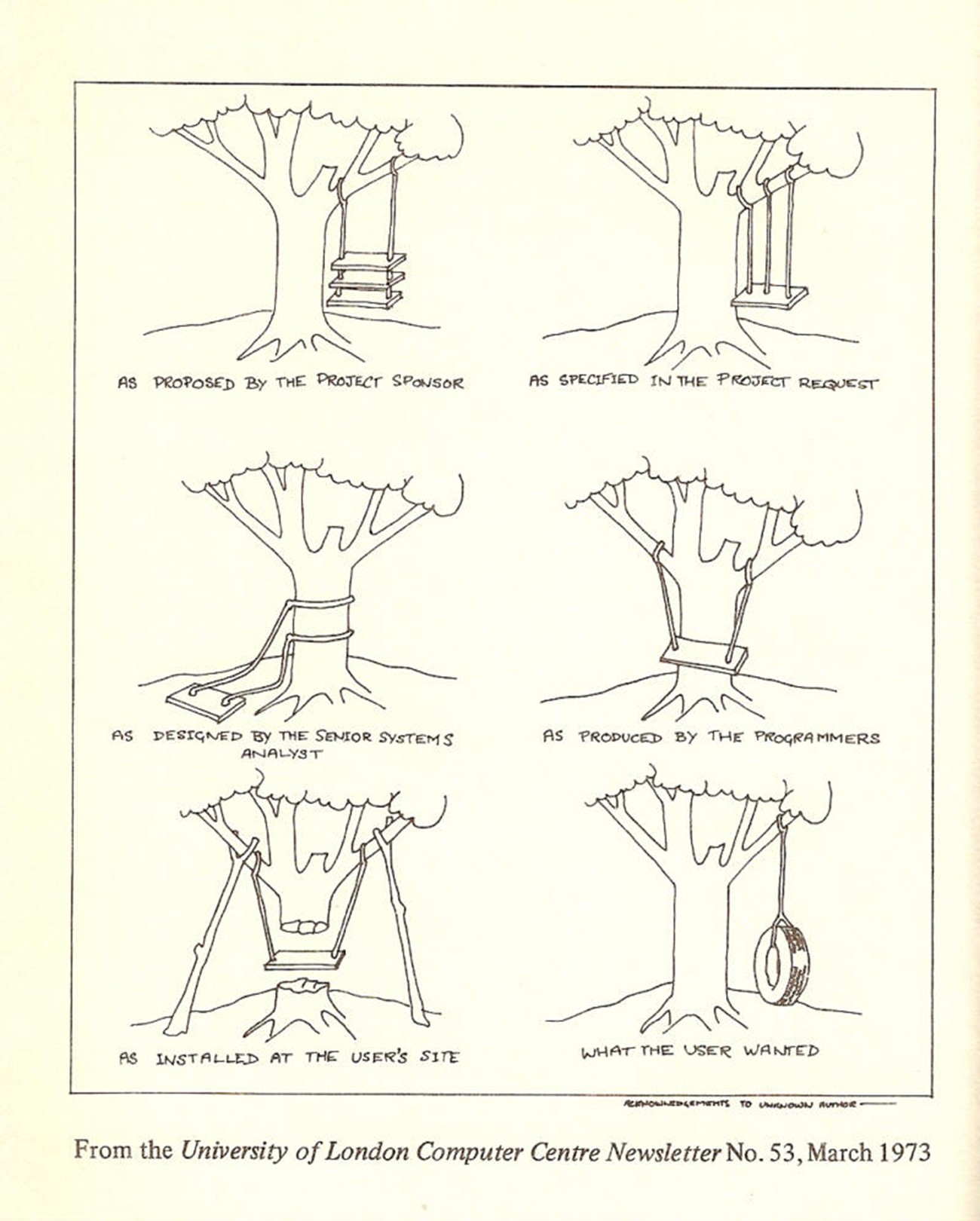
There have been many variations of the Tree Swing cartoon (both serious and humorous) over the years, though it’s not entirely clear when or by whom the original cartoon was created. Most agree that the original likely dates back to at least the early 1970’s or earlier, and the earliest version readily available online appears to be from the University of London Computer Centre Newsletter No. 53 from March 1973, pictured in this article.
Despite being over 50 years old, many of the same pitfalls depicted in the cartoon are still relevant to this day when it comes to project management. Technology may have changed significantly in this time, but the spirit of the message remains.
I have identified five key pitfalls that I believe are among the biggest factors to watch out for to prevent failures when managing a project. Being aware of these pitfalls will help you mitigate common issues that often arise over the life of any given project.
Poor communication between relevant parties
A lack of communication is often cited as the most significant reason for project failure. The Project Management Institute’s 2013 Pulse of the Profession report estimates that ineffective communication was a contributing factor in 56% of failed projects.
This lack of communication can come from many sides. Sometimes this can be a failure on the part of the project manager not establishing a cadence for meetings to discuss progress on a project, or perhaps a meeting may be held that does not include all relevant parties, or a client working with your company through a vendor communicates expectations which are not relayed to your development team. Setting expectations for communication early and sticking to these expectations throughout the life of a project can help close these gaps and ensure that your client is getting what they expect out of the project.
Not setting clear and realistic expectations
In a similar vein, not having clear and realistic expectations defined in the early stages of a project is also a recipe for failure. When your client, the vendor, your development team, and management are not aligned on what the expected outcome of the project is, it can lead to significant unnecessary deviations from what the client expects in their final product.
In the Tree Swing analogy, this is plainly laid out. When everybody involved has different expectations for what the outcome of the project should look like, it’s very easy to end up in a situation where a simple tire swing was what the client needed, but something entirely different was delivered. If these expectations are set early, clearly defined, and communicated to all parties, this can save significant amounts of time and money for all involved and lead to greater satisfaction with the outcome of the project.
Accountability for deliverables and communication
Expanding upon the setting of expectations, it should also be determined early on in a project who will be accountable for any given task, who needs to communicate updates on progress to your client, and who should be included in any meetings or status updates, to name a few of the most significant factors.
Having this information clearly laid out prior to beginning work on a project can help prevent confusion as to who is responsible for every aspect of the project, ensures that everything runs smoothly, and allows for anyone involved to directly communicate with someone relevant to a given task if there are any questions rather than expending unnecessary time or effort trying to get information from someone uninvolved or making assumptions which could lead to mistakes.
Scope creep
Another significant contributor to project failures is scope creep. The scope of a project includes what deliverables are expected at the conclusion of a project and what work is needed to meet these established goals. Scope creep is defined by the Project Management Institute as when “additional scope or requirements are accepted without adjusting the corresponding schedule, budget, or resource needs.”
It is often inevitable that changes will be made to a project over time, but when changes are made to a project that don’t go through the proper channels for documentation or don’t account for the additional time or resources necessary to be added to the scope of the project this can lead to unneeded effort expended by your team or extra work being done that is uncompensated or leads to missing project deadlines.
Unrealistic deadlines
In many cases, one person will not have all of the information necessary to determine how long a project will take on their own. There’s an old joke that reflects this sentiment: “A project manager is a person who thinks nine women can deliver a baby in one month.”
Setting a deadline with a relatively short turnaround time will likely look good on paper and will certainly make your client happy, but if the scope of work required to finish a project is simply too great to finish within that timeline you will have created a situation where your client is upset the work isn’t done when you could have communicated a more realistic deadline in the first place.
Avoiding this pitfall isn’t always possible, but it can at least be mitigated. Working with your development team and the client to hammer out all aspects of what the project will entail and gathering information about how long each step will realistically take can make this significantly less of an issue and allow you to more effectively meet established deadlines for your client.
Build the swing
These, of course, are not the only reasons why projects can fail or run into complications along the way. There will always be unknowns in any given project, but when as many of these unknownsas possible can be considered, it becomes significantly easier to prevent them from becoming issues that increase costs or add to turnaround times.
The Tree Swing cartoon, despite being created over 50 years ago, is still highly relevant to project management to this day and will likely remain relevant as a metaphor in the future, even as technology continues to evolve and project management processes continue to evolve with it.