













































Last week, NACUSO (the National Association of Credit Union Service Organizations) held its annual Reimagine Conference, an event full of CUSO collaboration, innovation, and education. The conference brought together CUSOs, partners, and vendors from all over the country to share ideas, discuss the latest technologies, and learn from one another.
The week showcased keynote speakers covering hot topics such as AI in the workplace and the adoption of cryptocurrency, as well as CUSO leaders, new and old, offering insights, wins, and lessons learned to support the creation and growth of new CUSOs. As an organization that seeks to drive innovation, NACUSO’s Reimagine 2026 also sought to lift up both new and thriving CUSOs that are bringing change and impact to their communities and credit unions through the Next Big Idea Competition and the CUSO of the Year awards.
And that’s just the tip of the iceberg! So, without further ado, let’s break down the biggest moments and memories from the 2026 NACUSO Reimagine Conference and cover some key takeaways for you to bring back to your credit union and/or CUSO.
New NACUSO President and CEO, Randy Salser, takes the stage
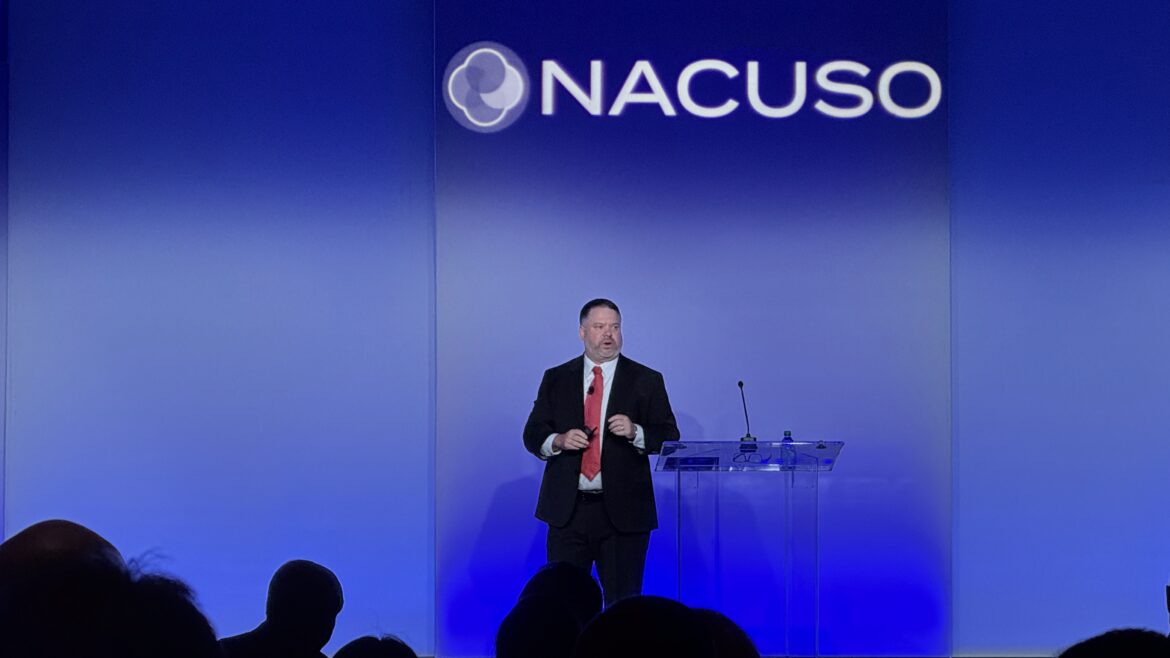
The last year has been one of new leadership for credit union and CUSO trade organizations alike, with both America’s Credit Unions and NACUSO entering 2026 with new captains at the helm. NACUSO’s new President and CEO, Randy Salser, took the stage at Reimagine—his first in the role—to deliver opening remarks. In his speech, Salser stressed how critical it is for our industry to thrive through collaboration and innovation in order to stay ahead of the megabanks that seek to outspend us.
“We’re meeting here at one of the most important moments of our industry in a long time,” said Salser. “Not because anything’s broken, but because everything is accelerating. Technology, member expectations, competition, fraud, everything is moving faster, and the gap between those who can adapt quickly and those who can’t is only getting wider.
“We’re standing at an inflection point. On one side, a system built on purpose. People helping people, trust, community. On the other side, some of the biggest financial institutions in the world have virtually unlimited capital. Investing billions into technology, data, and fintech ecosystems…These organizations are not just competing on rates anymore. They’re competing on experience, on speed, on personalization, on scale. And let’s be honest about something. They’re not trying to out-cooperate us. They’re trying to out-innovate us and out-spend us.
“So the question becomes, how do we win? Because we can’t and shouldn’t try to out-spend them. That’s not our model. But we do have something more powerful. We have each other. The credit union system was never designed to operate alone. It was designed to work together. And CUSOs are the purest expression of that idea. They allow us to scale innovation, to share risk, to move faster together. But if we’re honest, we haven’t fully unlocked that potential.”
Salser then went on to share the agency’s top three priorities: advocacy, collaboration, and education. Salser also emphasized these three components in his interview with CUSO Magazine earlier this year, particularly noting that NACUSO is striving to build a more robust education system to support the creation of new CUSOs.
Salser: Collaboration will keep us alive and relevant
So how do we fully unlock the potential that CUSOs offer, as Salser suggests? By working together to build something more than the sum of its parts. By harnessing collaboration in a way that is nonexistent and out of reach for the big banks. CUSOs bring value, new technologies, and innovation to credit unions that they might not otherwise be able to afford, allowing them to keep up with the competition and stay relevant.
But if credit unions don’t step out of their own habitat to continue to build new CUSOs, to bring credit unions and CUSOs together, and to innovate alongside each other, the ecosystem as a whole is in danger.
“Sometimes we operate in silos. Sometimes we move too cautiously. Sometimes we treat collaboration like an option instead of a strategy. That was changed because the next decade will not reward hesitation. It will reward alignment, speed, and collaboration at scale. So here’s the vision. To make collaboration the competitive advantage of the credit union industry. Not just something we talked about, but something we operationalize. It means strengthening the connection between credit unions, CUSOs, and mission-aligned FinTechs. Because innovation is happening everywhere.
“And if we’re not intentional about playing our part, we may not have a part to play. Credit unions will be at risk of becoming consumers of innovation instead of co-creators of it. It means elevating our voice and advocacy because regulation will take shape when it’s possible. And if we’re not actively engaged, we are choosing to limit our own future. It means telling a better story because what we’re doing matters. When credit unions come together to solve problems, to build solutions, that’s not just good business, it’s generational impact for the hundreds of millions of Americans who look to us for support at their greatest time of need.
“So where does that leave us? The future of this system will not be decided by who has the biggest balance sheet. It will be decided by those who can move together the fastest. Those who can align. Those who can partner. Those who can build. Because while large banks have scale, we have a model they cannot replicate. They can invest billions. They cannot recreate a system built on trust, on shared ownership, and on collaboration. That’s ours. The question is, are we going to fully use it? Because if we do, if we lean into collaboration, if we invest in each other, if we build together instead of apart, we don’t just keep up, we lead.
“At NACUSO, that’s our commitment. To help bring this system closer together. To create more opportunities to build. To advocate for what’s possible. And to make sure that collaboration is not just part of the story, it’s our advantage.” Salser concluded.
Next Big Idea Competition
In the spirit of NACUSO’s commitment to driving the inspiration, collaboration, and innovation that lead to the creation of new credit union solutions and CUSOs, each year, NACUSO hosts its Next Big Idea Competition, in which four up-and-coming CUSOs face off for $10,000. The goal of the competition is to “identify, support, and accelerate ideas that create real, measurable impact for credit unions, their members, and the communities they serve.”
Participants have only a handful of minutes to sell their idea to not only the panel of judges, but the audience as well. While the judges will ask further questions after the presentation, it’s ultimately up to the audience to decide who takes the prize. The four CUSOs presenting this year were:
- Starlight – A TruStage-backed CUSO that works by connecting members with local and government programs they qualify for that can offer financial assistance and benefits, and sees them through the whole process—from discovery to submitting paperwork.
- Duome – A CUSO aiming at making home ownership (an increasingly out-of-reach dream for many nowadays) a reality, by offering members financial assistance in purchasing a house in exchange for equity in the home.
- Crebit – On the heels of the GENIUS Act passing, Crebit helps members who are making international money transfers—such as international students and immigrant families—avoid hefty fees and slow processing times by utilizing Stablecoin.
- Charm Security – A fraud prevention CUSO that harnesses Agentic AI to assess, identify, and stop fraud in real time through the use of AI fraud agents who act as frontline, investigation, and intelligence agents.
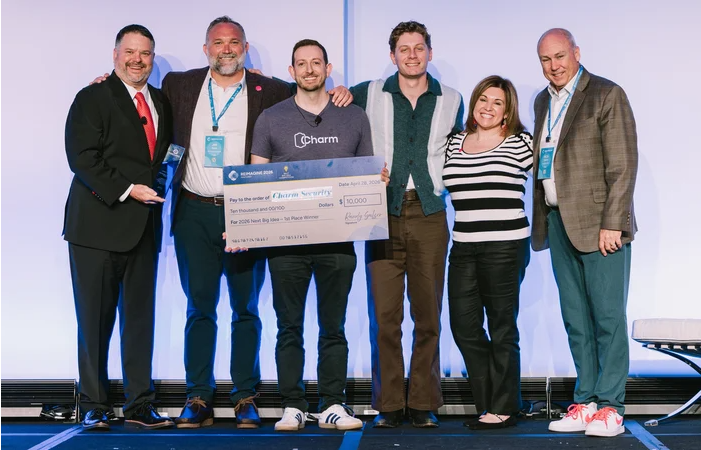
While all four of these developing CUSOs show promise and would bring great value to credit unions and their members, ultimately, it was Charm Security that won the audience over—potentially reflecting the industry’s growing concerns around fraud as well as its increasing interest in investing in AI—and took home the win.
As the winner, Charm Security not only gets $10,000 to support the CUSO’s growth, but a one-year NACUSO membership, active promotion from the organization, and a feature in a NACUSO podcast or workshop. In his acceptance speech, Charm Security founder Roy Zur promised to donate all the proceeds from the win to charity.
Rest assured, though, this is not the last we will hear of the other competitors either! Runners-up to the competition don’t walk away empty-handed. Second and third place winners—Duome and Cebit in this case–still receive a year-long membership to NACUSO and active promotion across their channels, so we can expect to see more from them in the future as their CUSOs develop.
We here at CUSO Magazine are also excited for all the potential these budding CUSOs have to offer, so keep an eye out for future interviews and info on how your credit union can team up with these all-stars.
CUSO of the Year Awards
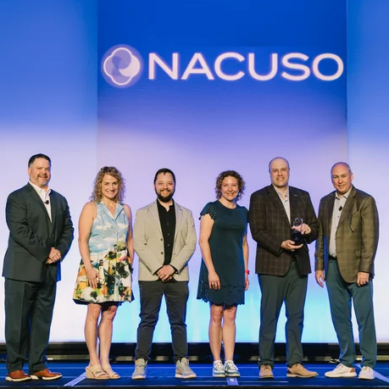
Continuing in that spirit of rewarding innovation and collaboration, bright and early Wednesday morning was the presentation of the CUSO of the Year awards. This ceremony recognizes “the organizations and leaders who are turning collaboration into results and innovation into real-world impact for credit unions and their members.” Overall, there are three categories awarded: New CUSO of the Year (a CUSO founded within the last five years), CUSO of the Year, and FinTech CUSO of the Year.
“These awards celebrate the CUSOs building the future of the credit union movement today,” said Nick Evens, President and CEO of Curql Collective.
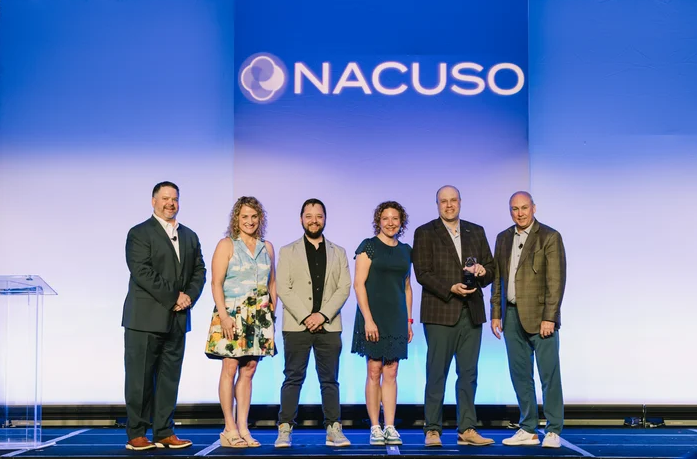 New CUSO of the Year: StoryFi
The importance of telling our credit union and/or CUSO story cannot be overstated. Scott Simpson discussed it at length at this year’s GAC, and as we mentioned earlier, it was a central part of Salser’s opening remarks. The best way our industry can advocate for itself is to ensure our brand, impact, and mission are captured and shared.
As such, it is fitting that NACUSO’s 2026 New CUSO of the Year award winner was StoryFi, a CUSO founded in 2023 by six credit unions that supports credit unions in creating visual media that effectively shares their credit union story and experiences. StoryFi’s mission is to “help financial service providers and purpose-driven organizations connect with their audiences on a deeper level, empowering them to share their stories with authenticity and impact.”
“Organizations that tell their stories well don’t just attract members or clients. Rather, they build and reinforce a system of beliefs,” said Nick Olexa, CEO of StoryFi, in his acceptance speech. “For years, we’ve heard industry leaders stand on stages just like this and say the same thing: credit unions and CUSOs need to tell their stories. Well, StoryFi is the direct answer to that call…We’re honored, we’re grateful, and we’re just getting started.”
Since its founding, StoryFi has been recognized and received dozens of awards, including 17 from America’s Credit Unions.
FinTech CUSO of the Year: Trust and Will
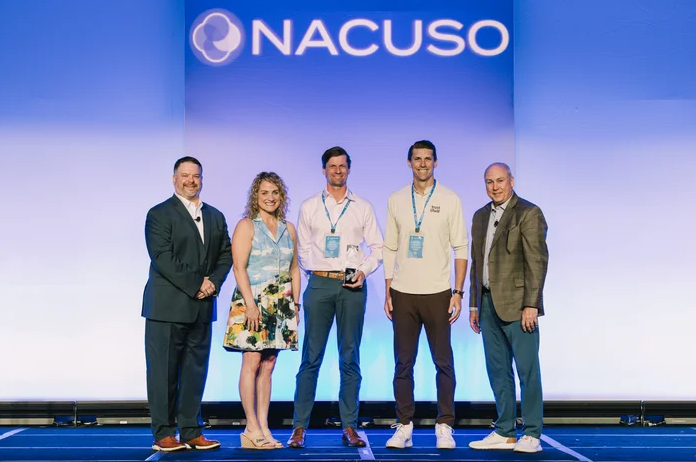
Credit unions are committed to helping their members through every stage of life, working to ensure their financial soundness. However, so few Americans have a proper will or estate plan, and until recently, many credit unions didn’t offer that service. Now, thanks to FinTech CUSO, Trust and Will, credit unions can “enable every American to create a plan that’s customized to fit their needs, their life, and their legacy.”
A digital trust, estate planning, and will creation service, Trust and Will makes these services, which are often unaffordable and out of reach (or overly complicated), easy and affordable for all. Given the work Trust and Will is doing to support member financial health through credit unions and their communities, it seems fitting that they would be the recipients of the 2026 FinTech CUSO of the Year award.
“We started Trust and Will with the very simple idea that we could make estate planning affordable and accessible to everybody in this country, and our vision is to help every single family leave a legacy,” CEO Cody Barbo said in his acceptance speech before taking a moment to thank all of their credit union partners. “We have over 300 credit unions that we work with, who work with their members and their family stories, multigenerationally, to protect what matters, and we’re just really honored that we can work with you all, and we’re very grateful for NACUSO.”
 CUSO of the Year: Members Trust
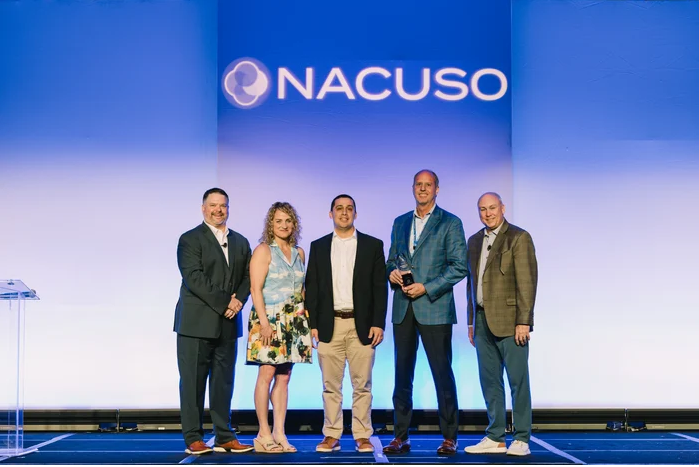
The final award of the day was the CUSO of the Year award, which “recognizes an established CUSO that has demonstrated exceptional value to its credit union partners by delivering innovative solutions to real industry challenges, adding measurable value for members, reducing operational costs and/or increasing income for credit unions, and demonstrating sustainable growth and long-term impact.”
As the nation’s first chartered trust and investment management company, completely owned by credit unions, Members Trust Company currently serves nearly 100 credit unions. With a mission of people before profit, Member’s Trust works to “combine the depth and breadth of capabilities often found at large national firms with the attentive, relationship-driven service typically only experienced at a boutique firm,” all while keeping with the cooperative vision.
Ken Lako, CEO of Member’s Trust, accepted the award, thanking their credit union partners for their support. ‘It’s the trust you place in us that allows us to do what we do each and every day,” said Lako. “I’m really proud to be part of this industry. I’ve spent my entire professional career in the CUSO industry, and people helping people is just something I’m very proud of, and Members Trust is also very proud of as well.”
Sarah Bang shares NCUA insight
Last up to the stage—but certainly not least —was Sarah Bang, who serves as the NCUA Chief of Staff and Senior Advisor to NCUA Board Chairman Kyle Hauptman. Bang sat down with Salser for a fireside chat to discuss both her and Hauptman’s future at the NCUA, what regulators misunderstand when it comes to CUSOs, the NCUA’s deregulation project, and how CUSO leaders can better work with the regulator.
The conversation opened by acknowledging the biggest question on everyone’s mind, which is, of course, when Hauptman’s replacement might be named. To that end, Bang stated that she and Hauptman were both still unsure of the specific timing, noting that they thought it would have been announced by now, but obviously hasn’t. In the interim, Bang stressed that Hauptman is 110% committed to his role at the NCUA and is absolutely not attempting to do two jobs, referring to his recent appointment to the PCAOB board, a role which he has yet to start. Though once Hauptman’s time at the NCUA comes to an end, Bang stated that hers most likely will as well, after 44 years in the industry.
Another big focus has been the agency’s deregulation project. Regarding the subject, Bang noted that the goal of the NCUA at the moment is to continue finding ways to make regulations simpler and less taxing on credit unions while still ensuring their safety and soundness. “We don’t run credit unions,” said Bang. “We repeat that: We do not run credit unions. We’ve got CEOs and boards and management that run credit unions. Let them run it. They’re faster, better, smarter than we are. And we just need to know that they’re doing it in a safe and sound manner and that they can explain it to us.”
As for what the NCUA will do next, Bang says the agency is working to “stay nimble,” as they never know what they’re going to find each day, due to the rapid pace at which D.C. is moving.
Switching to the subject of CUSOs, Salser asked what some of the common misconceptions around CUSOs were from a regulatory standpoint. Bang responded that often, examiners don’t fully understand the differences between small CUSOs and larger, mega-CUSOs, or the wholly-owned CUSOs. So offering education and ensuring the regulator understands exactly what type of CUSO you are and how you operate is key.
Additionally, Bang stressed the importance of understanding the role of CUSOs in the credit union space, and for newcomers to truly understand the obligations they have.
“The real trick is for the new CUSO leaders to understand who they are in this world,” said Bang. “This is not like Fiserv or somebody else, where you just make a profit and move forward. You’ve got to answer not only to the credit union owners, but to their regulator. There’s a tradeoff. There’s no third-party vendor authority, but the credit unions will suffer if you, as a CUSO, don’t do your bit. I mean, really suffer. And so understanding what your obligations as a CUSO leader are is very important.”
Finally, on the topic of innovation, Bang marveled at the history of innovation within the credit union space, remarking on their ability to collaborate and innovate through necessity. However, when it comes to the NCUA and innovation, Bang says not to wait around for the regulator, but to ensure your credit union board fully understands and that the proper due diligence has been done.
“We have to like innovation. That’s important for the survival of the credit union system. Innovation is key. But then that means that everybody’s got to do their due diligence and be able to explain from the basics up,” said Bang. “Do not ask NCUA for permission. We can’t give it to you. What we can tell you to do is do your due diligence. You know your credit union better than we ever could.”
Let’s get building
If GAC exists to remind the industry how and why to advocate, NACUSO Reimagine should be a stark reminder of why and how we innovate and collaborate. Our movement’s creation was an innovation in itself, and it’s these two things that will keep us going now and in the future.
In the words of Randy Salser, “We have the model. We have the people. We have the opportunity. Now it’s time to build together.”
So, let’s get building. And keep an eye out for future content from NACUSO Reimagine, including interviews and spotlights to come. If you’re interested in learning more about NACUSO, joining, or attending next year’s Reimagine Conference, you can find all you need on NACUSO’s website.


